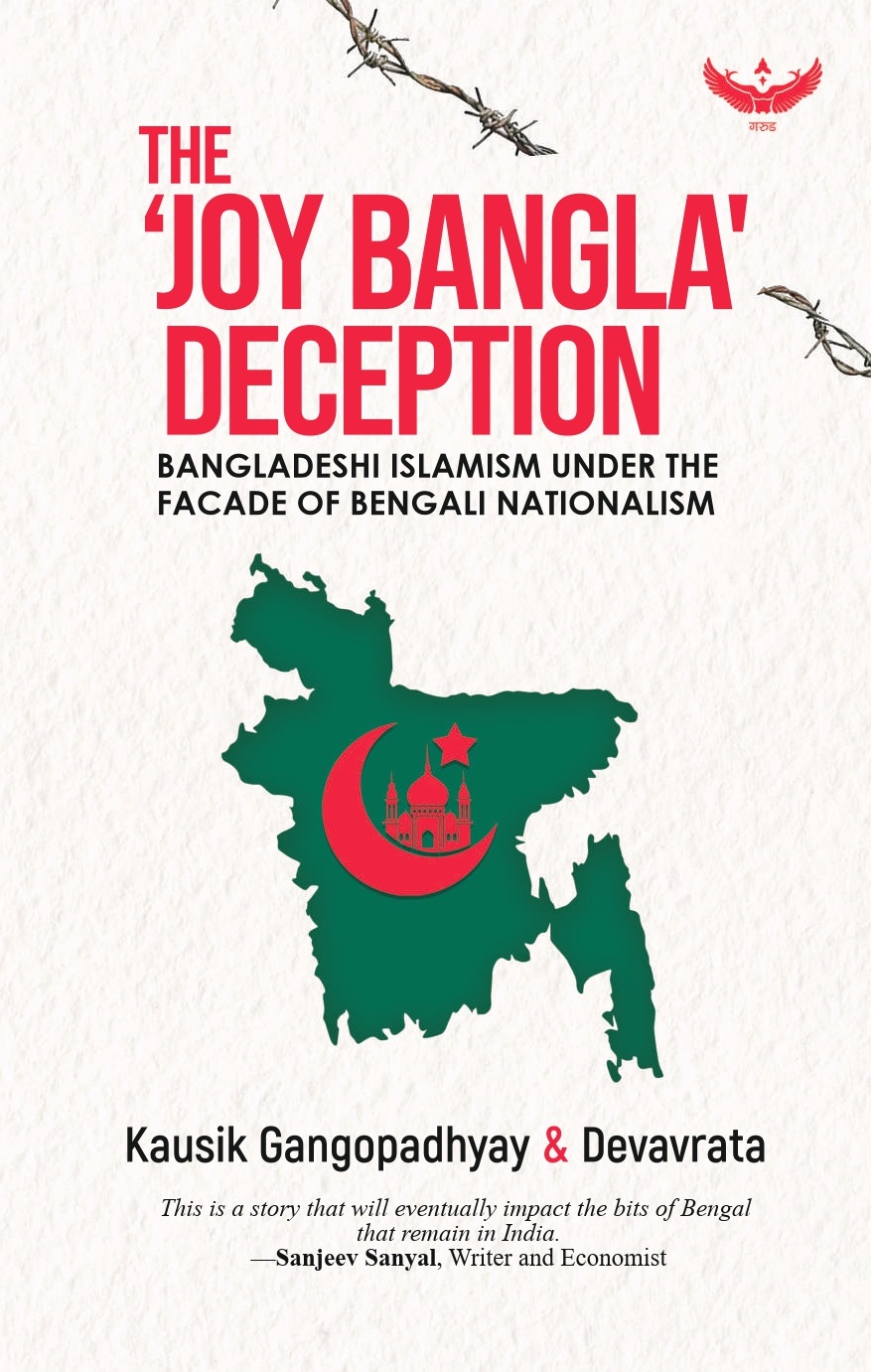
After August 2024, the scale of anti-Hindu violence in Bangladesh shook a narrative that had been carefully maintained for decades: that Bangladesh was a secular, tolerant nation, distinct in character from the Islamist currents elsewhere in South Asia. Kausik Gangopadhyay and Devavrata argue that the violence was not an aberration but the predictable outcome of a history that the liberal consensus had chosen not to examine.
The book works through that history systematically — the actual character of the 1952 language movement in East Pakistan, the dispossession of Hindu and Buddhist communities through successive legal mechanisms, the serial pogroms concealed behind the rhetoric of secularism. It also confronts the question of Bengali identity directly: who counts as Bengali, and whether that category is now being redesigned by Islamist political actors invoking the Greater Bangladesh concept first articulated by Maulana Bhasani. The distortion of Bengali ethnic history — including claims promoted by the Encyclopaedia Britannica — is examined as part of a broader appropriation of cultural memory.
-:ABOUT THE BOOK:- For decades, liberals like Amartya Sen have claimed Bangladesh to be the paragon of peace, harmony and tolerance in the Indian subcontinent. The massive rise in Hindu persecution post August 2024 has proved that the liberal narrative of Bangladesh could not have been more wrong. The book uncovers the story of Bangladesh that the alleged left had actively attempted to suppress and censor. It dispels the myth of 21 February as well as the language movement in East Pakistan. The story of Bangladesh is that of subversion of Hindus and Buddhists through legalized thefts to waves of pogrom to constant discrimination while paying lip service to the rhetoric of secularism. After being the victim of violence in East Pakistan/Bangladesh, Bengalis are now facing the loss of their identity with the noise of Greater Bangladesh called by Maulana Bhasani becoming louder. The conferring of the award of the greatest Bengali to Mujibur Rahman or the peddling of the complete distortion of history by the Encyclopaedia Britannica that Bengali ethnicity was born from a massive migration of people from the middle-east around 1,400 years ago are its two expressions. In conclusion, the book calls for safeguarding the Bengali identity and language by preventing its appropriation by the Bengali-speaking Islamists.


.webp)
-(1)_compressed-(1)_page-0001.jpg)







.webp)