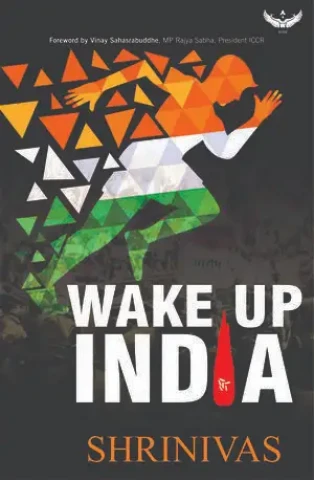
On Independence Day 2020, Narendra Modi became the longest-serving non-Congress Prime Minister in Indian history, passing the benchmark set by Atal Bihari Vajpayee's 2,272 days. The milestone prompted a pointed question from analyst Amit Bagaria: is India actually moving toward a Congress-mukt Bharat, or does the phrase remain political rhetoric?
Bagaria examines the structural and electoral conditions that produced this shift — how the Congress party's hold on Indian politics, once treated as a permanent fact of national life, was broken, and what has replaced it. The book tracks Modi's tenure as a period of deliberate institutional and economic reshaping, assessing whether the changes being made are durable realignments or reversible policies. The analysis is framed not as a celebration but as a serious inquiry into the direction of Indian democracy's dominant axis.
For readers trying to understand how India's political map was redrawn across two decades, and what the long absence of Congress from power actually means for governance and opposition, this is a data-anchored entry point.
On Independence Day 2020, Narendra Modi became the longest-serving non-Congress Prime Minister of the world’s largest democracy, surpassing the 2,272 days of the first and only other BJP Prime Minister, Atal Bihari Vajpayee.
2 June 2022 will mark the longest period of a non-Congress rule in India’s history!
"As Modi rides a ‘bullet train’ in reshaping India, I want to ask—are we headed towards Congress-mukt Bharat?"
- Amit Bagaria





.webp)


-(1)_compressed-(1)_page-0001.jpg)




.webp)