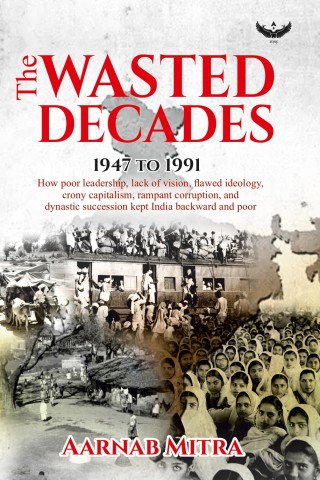
In 1947, India held the only working steel plants, aircraft factory, and functioning industrial base in Asia. By 1991, it stood on the edge of bankruptcy, carrying the world's largest population of illiterate people and rising unemployment. The forty-four years between those two points are what Aarnab Mitra calls the wasted decades.
Mitra's account is not a general lament. He identifies specific causes: the Nehru family's direct rule for thirty-eight of those forty-four years, policies built on flawed ideology, crony capitalism, rampant corruption, and dynastic succession that closed off accountability. He asks why Japan and the East and Southeast Asian nations — starting from far worse positions in 1945 — achieved economic transformations that India failed to match. The book treats this not as historical inevitability but as a series of decisions made by identifiable people with identifiable consequences, and asks precisely what those decisions cost.
The Wasted Decades: 1947 to 1991 by Aarnab Mitra is a critical examination of India's post-independence economic and political journey. This compelling book explores how India, despite having Asia's only working steel plants, aircraft factory, and industrial base in 1947, fell behind its Asian peers whilst countries like Japan and East and Southeast Asian nations achieved remarkable economic progress. The author analyses the factors that kept India backward and poor during this crucial 44-year period, including poor leadership, lack of vision, flawed ideology, crony capitalism, rampant corruption, and dynastic succession. Through thought-provoking questions, the book investigates why India had the world's largest number of illiterate people by 1991, why unemployment continued to rise, and why the nation teetered on the brink of bankruptcy. With the Nehru family ruling directly for 38 years of this period, the book examines the impact of Nehruvian policies on India's development trajectory. This historical analysis offers readers valuable insights into understanding the systemic issues that hindered India's progress and provides essential context for comprehending modern India's economic challenges and achievements.