When the British left in August 1947, India was not yet India. More than five hundred princely states had to decide independently whether to accede to the new union — and nothing obligated them to do so. The political map of the subcontinent was, in a very real sense, unresolved. What resolved it was Sardar Vallabhbhai Patel, working with a speed and firmness that has no parallel in the formation of modern states.
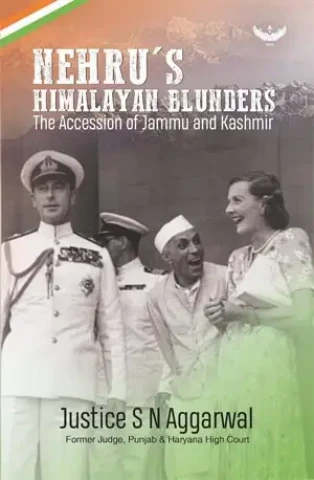
Justice S N Aggarwal reconstructs Patel's campaign state by state, moving beyond the familiar episodes of Hyderabad and Junagadh to recover the negotiations that brought in Chhattisgarh, Odisha, the Deccan States, Lunavada, and dozens of others that have since become so thoroughly Indian that their conditional status in 1947 has been forgotten. The book is a step-by-step account of what it actually took — politically, legally, and personally — to make the union work.
For students and general readers who think they know the geography of independent India, this is a reminder that the country they see on the map was not given but made.
India’s independence from the British on August 15, 1947, was preceded by its partition on religious lines having a murky history of dangerous antics and shenanigans of the likes of Muslim League, Jinnah and others; supported, either by accident or design, by Congress and its leadership. That Nehru failed miserably to control the situation, in which there was bloodshed, communal hatred, brutalization of women and loss of India’s territory, is a well-known story. The question is what would have been the status of India’s political borders had, say, Nehru been in charge of ‘unifying’ India – that is bringing together more than 500 princely states within the Indian union? We could well have been left to wishful thinking - “Had Sardar been the in-charge of the department handling unification of princely states within the Indian union”. This book, a well-researched document, takes the reader step-by-step on how Sardar went after the task; and how diligently he completed them. Of course, the story of Hyderabad and Junagarh is slightly more well-known. But do you know how Chhattisgarh and Orissa (now Odisha), or even Lunavada (in Gujarat), Deccan States and so many others were included in the Indian union? Do we today ever realise that these states were ‘not part of independent India’? That is why we say it is not only a book for history enthusiasts but all students, who ought to know the real political map of our country when it became independent.